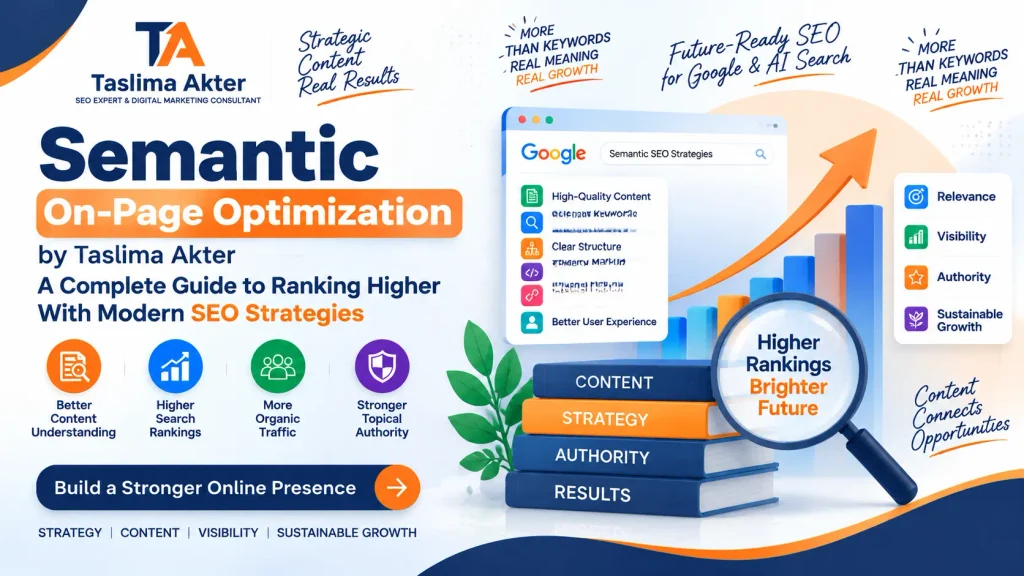
Semantic On-Page Optimization by Taslima Akter represents a modern approach to improving website relevance, search visibility, and organic growth by helping search engines better understand content meaning, context, and relationships. In today’s evolving digital environment, businesses need more than traditional keyword placement to achieve sustainable SEO success.
Search engines like Google are becoming increasingly intelligent by analyzing user intent, entities, topic relationships, and content quality. Therefore, businesses must optimize their websites in a way that communicates clear meaning rather than focusing only on individual keywords.
Semantic On-Page Optimization combines advanced SEO techniques such as semantic keyword research, entity optimization, search intent analysis, content structure improvement, internal linking, and E-E-A-T-focused content development. These strategies help websites create more valuable experiences for users while improving how search engines interpret and rank their information.
Unlike traditional on-page SEO methods that mainly focus on keyword frequency and basic optimization elements, semantic optimization focuses on building deeper connections between topics, concepts, and user needs. As a result, websites can improve their topical relevance and create stronger authority within their industry.
This complete guide by Taslima Akter explains how Semantic On-Page Optimization works, why it is important for modern SEO, and how businesses can use advanced optimization strategies to improve rankings, search visibility, and long-term digital growth.
Introduction to Semantic On-Page Optimization
Semantic On-Page Optimization focuses on improving website content so search engines can understand the meaning, purpose, and relationship between different information elements. Instead of optimizing pages only for specific keywords, semantic SEO creates content that covers complete topics and satisfies user intent.
Modern search algorithms analyze multiple factors to determine content quality, including relevance, context, expertise, and usefulness. Therefore, businesses need optimization strategies that help search engines understand not only what a page says but also why it provides value to users.
The Evolution From Keyword SEO to Semantic SEO
Earlier SEO strategies heavily depended on matching exact keywords with search queries. However, search engines have evolved beyond simple keyword matching and now focus on understanding language, concepts, and user expectations.
- Moving from keyword repetition to topic relevance
- Understanding user intent behind searches
- Connecting related concepts and entities
- Creating complete and valuable content experiences
Why Semantic Optimization Matters for Modern Websites
Semantic optimization helps websites create stronger connections between content and search intent. When pages provide comprehensive answers and demonstrate expertise, they have better opportunities to appear for a wider range of related searches.
- Improves content relevance
- Supports higher search visibility
- Builds topical authority
- Enhances user experience
- Creates long-term SEO value
How Semantic SEO Supports Google and AI Search
Google and AI-powered search systems analyze relationships between information sources, entities, and concepts. Semantic optimization helps websites provide clearer signals that improve machine understanding.
Improving Content Understanding Through Context
Context allows search engines to understand the meaning behind words and topics. By using related concepts and structured information, websites can communicate clearer relevance.
Preparing Websites for Future AI Search
AI search platforms require content that is organized, informative, and easy to interpret. Semantic optimization helps create content structures that support future search experiences.
What Is Semantic On-Page Optimization and How Does It Work?
Semantic On-Page Optimization is the process of improving website pages by focusing on meaning, context, and relationships between information. It combines content optimization, entity understanding, and search intent analysis to create pages that are valuable for both users and search engines.
Understanding the Core Concept of Semantic SEO
Semantic SEO focuses on helping search engines understand the complete meaning behind content. It considers related topics, concepts, entities, and user questions instead of relying only on exact-match keywords.
- Meaning-based content optimization
- Topic relationship development
- User intent alignment
- Context improvement
Key Components of Semantic On-Page Optimization
- Semantic keyword optimization
- Entity-based optimization
- Search intent matching
- Content structure improvement
- Internal linking strategy
- Schema markup implementation
Creating Meaningful Connections Between Content Elements
Semantic optimization connects related ideas within a website. These connections help search engines identify topic relationships and understand the overall expertise of a website.
Importance of Semantic SEO for Higher Rankings
Semantic SEO plays an important role in modern search optimization because search engines now evaluate content quality beyond keyword usage. Websites that provide complete, relevant, and trustworthy information can create stronger ranking opportunities.
Improving Search Engine Understanding
Search engines use advanced systems to understand relationships between topics, entities, and user queries. Semantic optimization provides clearer signals that improve content interpretation.
- Better topic recognition
- Improved relevance signals
- Stronger content relationships
- Enhanced search understanding
Creating Better User Experiences
Semantic optimization improves user experience by creating content that directly answers questions, provides complete information, and guides visitors effectively.
- Clear information structure
- Easy content navigation
- Helpful answers
- Higher user satisfaction
Benefits of Implementing Semantic On-Page Optimization
- Improved organic visibility
- Stronger topical relevance
- Better content performance
- Future-ready SEO foundation
Traditional On-Page SEO vs Semantic On-Page Optimization
Traditional On-Page SEO Approach
- Keyword placement
- Title optimization
- Meta description improvement
- Basic content formatting
Semantic On-Page SEO Approach
- Topic understanding
- Entity relationships
- Search intent optimization
- Comprehensive content coverage
Why Modern SEO Requires Semantic Optimization
As search technology continues to improve, businesses need optimization methods that focus on meaning and user satisfaction. Semantic SEO provides a stronger foundation for long-term search growth.
Semantic Content Optimization Strategies for Better Search Rankings
Through effective Semantic On-Page Optimization, websites can improve content relevance by connecting related concepts, answering user questions, and creating stronger relationships between topics. This approach helps search engines understand the purpose of a page and its value for users.
Creating Comprehensive Content Around Core Topics
Modern SEO requires content that goes beyond surface-level information. Comprehensive content covers important subtopics, related concepts, and supporting details that help users find complete answers.
- Cover primary and secondary topics
- Include related concepts and terms
- Answer common user questions
- Provide valuable industry insights
Optimizing Content Structure for Semantic Understanding
A well-structured page improves readability for users and understanding for search engines. Clear headings, organized sections, and logical content flow create stronger semantic signals.
- Use proper heading hierarchy
- Create meaningful sections
- Organize information logically
- Improve content navigation
Important Elements of Semantic Content Optimization
- Topic relevance
- Related keyword usage
- Entity connections
- Content depth
- User-focused information
Optimizing Content With Related Keywords and Concepts
Semantic keywords help search engines understand the broader meaning of content. Using related terms naturally improves topical relevance without unnecessary keyword repetition.
Improving Content Quality Through Expertise
High-quality content should demonstrate experience, expertise, and practical knowledge. Adding original insights and useful explanations strengthens trust signals.
Search Intent Optimization for Semantic SEO Success
Search intent optimization helps businesses create content that matches what users actually want when they perform a search. Understanding intent is a major part of Semantic On-Page Optimization because search engines evaluate whether content satisfies user expectations.
Understanding Different Types of Search Intent
- Informational Intent: Users looking for knowledge, guides, and explanations.
- Commercial Intent: Users comparing options before making decisions.
- Transactional Intent: Users ready to take action or purchase.
- Navigational Intent: Users searching for a specific website or brand.
Creating Intent-Focused Content Solutions
Content should be designed around user needs instead of only search terms. By understanding why people search, businesses can create more useful and relevant pages.
- Identify user problems
- Provide direct answers
- Include supporting information
- Create better content experiences
How Search Intent Improves Semantic Optimization
- Improves content relevance
- Reduces content gaps
- Enhances user engagement
- Supports better rankings
Technical On-Page SEO Factors Supporting Semantic Optimization
Technical on-page SEO creates the foundation that allows semantic content to perform effectively. Even high-quality content needs proper technical optimization to be crawled, indexed, and understood by search engines.
Optimizing Website Structure and Information Architecture
A clear website structure helps search engines understand relationships between pages and topics. Proper organization also improves user navigation.
- Logical URL structure
- Clear category organization
- SEO-friendly navigation
- Better content accessibility
Internal Linking for Semantic Relationships
Internal links connect related pages and help search engines understand topic relationships. Strategic linking also distributes authority throughout a website.
- Connect related content
- Support important pages
- Improve crawling efficiency
- Strengthen topical signals
Technical Elements for Semantic SEO Performance
- Schema markup implementation
- Title tag optimization
- Meta description optimization
- Image ALT optimization
- Mobile optimization
- Core Web Vitals improvement
AI Search and GEO Strategies With Semantic On-Page Optimization
AI-powered search systems are changing how information is discovered and presented. Therefore, businesses need content that is structured, meaningful, and easy for artificial intelligence systems to understand.
Semantic On-Page Optimization supports Generative Engine Optimization (GEO) by improving content clarity, entity relationships, and information accuracy.
Preparing Content for AI-Powered Search Platforms
- Create clear answers
- Use structured information
- Build topical relationships
- Improve content accuracy
Optimizing Content for Google AI Overview
Google AI systems rely on trustworthy and well-organized information. Content that clearly explains topics and provides valuable answers has stronger opportunities to be understood by AI systems.
AI-Friendly Semantic Optimization Methods
- Question-based content
- Clear explanations
- Entity-focused optimization
- Structured content formats
Measuring Semantic SEO Performance and Growth
Measuring Semantic SEO performance helps businesses understand whether their optimization efforts are improving visibility, relevance, and user engagement.
Important Metrics to Track Semantic SEO Success
- Organic traffic growth
- Keyword visibility
- Ranking improvements
- User engagement
- Content performance
Using SEO Data to Improve Optimization Strategies
Regular performance analysis helps identify content opportunities, improve existing pages, and create stronger optimization strategies.
Signs of Successful Semantic Optimization
- Higher search visibility
- Improved topic coverage
- Better user engagement
- Stronger website authority
Common Semantic On-Page Optimization Mistakes Businesses Should Avoid
Many businesses struggle with semantic SEO because they focus on outdated optimization methods. Avoiding these mistakes helps create stronger and more effective SEO strategies.
Focusing Only on Exact Match Keywords
Modern search engines understand concepts and context. Overusing exact keywords can reduce content quality and user experience.
Ignoring Search Intent
Content that does not match user expectations may struggle to perform, even when keywords are included.
Creating Thin Content Without Context
Short and incomplete content may fail to demonstrate expertise or provide enough value for users.
How to Improve Semantic SEO Implementation
- Research topics deeply
- Understand user intent
- Optimize entities and relationships
- Create valuable content
- Continuously improve pages
Why Choose Taslima Akter for Semantic On-Page Optimization
Choosing the right SEO expert is important for businesses that want to improve search visibility, strengthen content relevance, and build a sustainable online presence. Taslima Akter focuses on advanced Semantic On-Page Optimization strategies that help websites communicate more effectively with search engines and users.
Modern SEO requires more than adding keywords to web pages. It requires understanding user intent, improving content relationships, optimizing entities, and creating meaningful information structures. Through a research-driven approach, Taslima Akter helps businesses create websites that are more understandable, relevant, and prepared for future search technologies.
Data-Driven Semantic SEO Strategies
Every website has different SEO opportunities and challenges. Therefore, semantic optimization strategies should be based on proper research, website analysis, and performance data.
- Semantic keyword research
- Search intent analysis
- Content gap identification
- Entity optimization planning
- SEO performance evaluation
Combining Semantic SEO With Modern Search Strategies
Search engines continue to evolve, and businesses need optimization strategies that adapt to changing search behavior. Taslima Akter combines semantic SEO principles with modern techniques such as AI search optimization, GEO strategies, and content authority development.
- AI-friendly content optimization
- Entity-based SEO improvement
- Topical authority development
- User-focused content strategy
Building Long-Term SEO Growth Through Better Content Understanding
The goal of Semantic On-Page Optimization is not only improving individual rankings but also creating a strong digital foundation. By improving relevance, context, and authority, businesses can achieve more sustainable search growth.
A Complete Semantic SEO Optimization Approach
- Website analysis and SEO research
- Semantic content improvement
- Entity and topic optimization
- Technical on-page enhancements
- Continuous performance monitoring
Step-by-Step Semantic On-Page Optimization Roadmap
A successful semantic SEO campaign requires a structured process. By following a clear roadmap, businesses can improve content understanding, strengthen relevance, and create better opportunities for organic growth.
Step 1: Analyze Website Content and Current SEO Performance
The first step is understanding the current condition of a website. A detailed analysis helps identify optimization opportunities, content weaknesses, and technical improvements.
- Review existing content
- Analyze keyword performance
- Identify content gaps
- Evaluate competitor strategies
Step 2: Research Semantic Keywords and Related Entities
Semantic research helps discover related terms, concepts, and entities connected to the main topic. This creates a stronger content foundation.
- Find related search terms
- Analyze topic relationships
- Identify important entities
- Build keyword clusters
Step 3: Optimize Content Structure and Relevance
Content optimization focuses on improving structure, depth, and usefulness. Pages should clearly communicate information while satisfying user expectations.
- Improve heading structure
- Add relevant information
- Strengthen topic coverage
- Improve readability
Step 4: Improve Internal Linking and Semantic Relationships
Internal linking creates connections between related pages. These connections help search engines understand website structure and content relationships.
- Connect related content
- Support important pages
- Improve user navigation
- Strengthen topical signals
Step 5: Monitor Performance and Continuously Improve
SEO requires continuous improvement because search algorithms and user behavior constantly change. Regular monitoring helps businesses identify new opportunities.
- Track ranking changes
- Measure organic growth
- Analyze user behavior
- Update optimization strategies
Frequently Asked Questions About Semantic On-Page Optimization
1. What Is Semantic On-Page Optimization?
Semantic On-Page Optimization is the process of improving website content by focusing on meaning, context, relationships, and user intent instead of only targeting individual keywords.
2. Why Is Semantic SEO Important for Google Rankings?
Semantic SEO helps search engines better understand content relevance, topic relationships, and user needs, which supports stronger search visibility.
3. How Is Semantic SEO Different From Traditional SEO?
Traditional SEO focuses mainly on keywords and ranking factors, while semantic SEO focuses on context, meaning, entities, and complete topic coverage.
4. What Are Semantic Keywords?
Semantic keywords are related words and concepts that help search engines understand the broader meaning of a topic.
5. How Does Entity SEO Improve Content Understanding?
Entity SEO helps search engines recognize relationships between brands, people, services, and topics, improving content interpretation.
6. Can Semantic SEO Improve AI Search Visibility?
Yes. Semantic SEO creates structured and meaningful content that can help AI systems better understand and process information.
7. What Role Does Search Intent Play in Semantic Optimization?
Search intent helps businesses create content that matches what users are looking for, improving relevance and user satisfaction.
8. How Long Does Semantic SEO Take to Show Results?
The timeline depends on website condition, competition, content quality, and optimization efforts. Consistent improvement usually creates stronger long-term results.
9. What Are the Main Elements of Semantic On-Page Optimization?
Main elements include semantic keywords, entities, search intent, content structure, internal linking, schema markup, and user-focused optimization.
10. Why Choose Taslima Akter for Semantic On-Page Optimization?
Taslima Akter provides research-based semantic SEO strategies that combine content optimization, entity SEO, and modern search techniques to improve online visibility.
Conclusion: Build Stronger Rankings With Semantic On-Page Optimization
Semantic On-Page Optimization has become an essential strategy for businesses that want to improve search visibility, content relevance, and long-term SEO performance.
By focusing on search intent, semantic relationships, entities, and valuable content experiences, businesses can create websites that are easier for both users and search engines to understand.
As search technology continues evolving, adopting semantic SEO strategies helps businesses prepare for Google updates, AI-powered search, and future digital opportunities.
Final CTA: Improve Your Website Visibility With Semantic SEO Strategies
Ready to improve your website relevance and search performance? Work with Taslima Akter to create a powerful Semantic On-Page Optimization strategy designed for better rankings, stronger authority, and sustainable SEO growth.