My approach is human-first, not algorithm-first.
If your website has content but still struggles to rank, the problem is often not just backlinks or keywords. In many cases, the real issue is weak topical depth, poor content structure, and missing on-page authority signals.
I help brands, service businesses, and website owners build stronger organic visibility through Topical Content SEO and On-Page Authority optimization. This means creating and refining your site in a way that helps Google clearly understand your expertise, your relevance, and your trustworthiness across a complete topic—not just around one isolated keyword.
When your website is properly structured around user intent, semantic relevance, and EEAT, it becomes easier for search engines to trust your pages and rank them for the terms that matter most to your business.

Topical Content SEO is a strategic approach where your website content is built around a complete subject area instead of targeting random standalone keywords.
Rather than publishing disconnected blog posts and hoping one page ranks, topical SEO focuses on building a well-connected content eco system. This helps search engines understand that your website covers a topic in depth and deserves visibility for related searches.
For example, if your business is in SEO, it is not enough to only have one page about SEO services. A strong topical content strategy will also cover related areas like:
When these pages are properly planned and linked together, your website starts to look more authoritative in Google’s eyes.
.
Topical Content SEO is a strategic approach where your website content is built around a complete subject area instead of targeting random standalone keywords.
Rather than publishing disconnected blog posts and hoping one page ranks, topical SEO focuses on building a well-connected content eco system. This helps search engines understand that your website covers a topic in depth and deserves visibility for related searches.
For example, if your business is in SEO, it is not enough to only have one page about SEO services. A strong topical content strategy will also cover related areas like:
When these pages are properly planned and linked together, your website starts to look more authoritative in Google’s eyes.
.
Google has become much better at evaluating context, content depth, entity relationships, and real expertise. That means thin pages and keyword-stuffed articles are much less effective than before.
Today, Google rewards websites that:
If your content only focuses on one exact keyword and ignores the broader topic, your competitors can easily outrank you with stronger topical relevance.
That is why Topical Content SEO is no longer optional for serious businesses that want sustainable rankings.

I do not rely on guesswork or generic AI-style writing. My process is built around research, structure, user intent, and practical SEO execution.
I start by identifying the main topic your business wants to rank for, then I map out the supporting subtopics, search intent layers, and semantic relationships around it.This includes:primary topic discovery, subtopic clustering, content gap analysis, competitor comparison, supporting entities and related searches, People Also Ask Opportunities.
Every keyword has intent behind it. Some users want information, some want comparison, and some are ready to buy.I structure content based on real search intent so that the page aligns with what users actually want when they land on it. This increases engagement, reduces bounce, and improves the overall relevance of the page.
Google wants content that demonstrates:Experience, Expertise, Authoritativeness, Trustworthiness,That is why I create content that feels informed, useful, and credible—not vague or machine-generated. This includes:expert positioning, practical explanations, trustworthy language, clear service framing, real-world usefulness decision-support content for users.
Modern SEO is not about repeating the same keyword again and again. It is about covering the topic naturally with the right context.I optimize pages using:semantic keyword placement, entity-based relevance, heading optimization, topic-supporting terms contextual variations, readable formatting, natural user-first language.
A strong topical SEO strategy needs a smart internal linking structure. I help create links between related pages so authority flows naturally across your website.This helps Google:discover more pages, understand topic relationships, measure relevance across clusters, strengthen important landing pages.
Traffic without leads is not enough. That is why I write content that is also designed to convert.Your page should not only rank. It should also guide users toward action through:clear messaging, trust signals, benefit-focused sections, objection handling, strong calls to action.
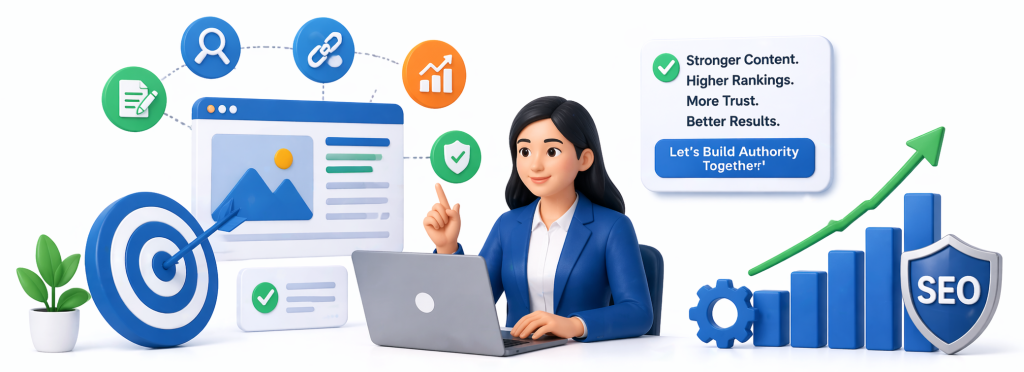
If you want a page that supports real organic growth, brand credibility, and long-term ranking potential, Taslima Akter, SEO expert can help you build that foundation the right way.

When your website has stronger topical authority, the results often extend beyond one page.
Benefits can include:
A strong content cluster does not only help one article rank. It helps your whole website become more understandable and more valuable to search engines.
When I optimize a page for topical content SEO and on-page authority, I focus on both rankings and real business value.
You get:
This is especially useful for:
As an SEO professional focused on practical ranking strategies, I understand that content must do more than fill space. It needs to support visibility, trust, and growth.
My approach combines:
I focus on creating pages that are not only optimized for search engines but also valuable for real people. That balance is where long-term SEO results come from.
You are not getting generic content templates. You are getting a page built to strengthen your site’s authority in a meaningful way.

Topical Content SEO is the strategy of organizing your website content around a complete topic cluster, ensuring depth, relevance, and semantic coverage rather than focusing on a single keyword.
Google rewards websites that cover a topic comprehensively, answer real user queries, and demonstrate expertise and trustworthiness, which boosts overall rankings.
Create interconnected content clusters, optimize on-page SEO elements, use semantic keywords, link internally, and focus on EEAT signals across your site.
No. Topical SEO benefits service pages, product pages, and any type of website by increasing relevance, authority, and user trust across the domain.
Results vary depending on competition, website authority, and content depth, but structured topical SEO often shows noticeable improvement within a few months.
Keyword-focused SEO targets individual keywords, while topical SEO builds clusters around a full topic, covering subtopics and related searches for broader authority.
Use comprehensive headings (H1–H3), semantic keywords, structured content, internal linking to related pages, and clear EEAT signals to optimize each page.
Yes. Even smaller sites can rank better by clearly defining their niche, creating in-depth content clusters, and demonstrating authority on specific topics.
Strong on-page authority through structured content, semantic relevance, and trust signals helps Google recognize your page as an expert source in its topic cluster.
Absolutely. Local businesses can use topical clusters to target services, areas, and user intent, increasing visibility in local search results and map packs.